
7 Tips for Your First Mammogram!
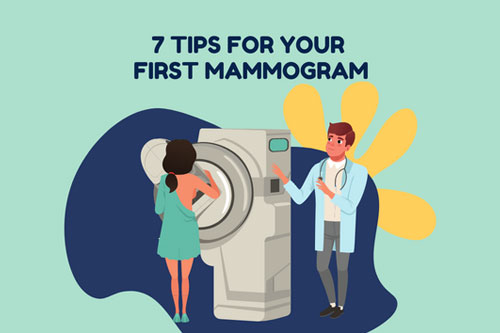
7 Tips for Your First Mammogram!
Dr. Reshma Francis, MBBS, DMRD, FRCR (UK), Senior Consultant Radiologist
India’s Leading Mammography Expert
 No one is immune to breast cancer. No one can prevent it. Early detection with routine screening is the best protection.
All women carry at least an average risk of breast cancer after puberty, with increasing risk as you age.
About 50% of breast cancers develop in women with no identifiable risks other than gender and age.[1]
Some women are at higher risk than this due to family history, breast density, genetics, personal history of breast disease, obesity, smoking, etc.
Mammography is the gold standard test for early breast cancer detection.[2]
Breast cancer deaths are reduced by 30% to 50% with annual screening mammography performed on all women beginning at age 40 years.[3]
If you are 40 with no identifiable breast cancer risk, it’s time for your first screening mammogram. Start earlier if you are in a higher risk category, in consultation with your doctor.
It’s ok to be anxious about your first mammogram. Knowing what to expect may calm you down. After all, it’s a quick imaging test that is proven to be a lifesaver.
Hence, here are seven tips that may make your first mammogram an easy experience:
- Don’t be anxious:
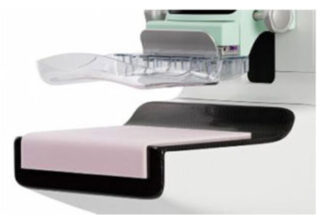
- It’s much more comfortable getting a mammogram today due to advanced technology. A comfort-improving feature called curved compression surface with its cushions minimizes the pressure and discomfort during mammography by mirroring the shape of the breast for more uniform compression.
- It’s quick- in less than 10 seconds the latest 3D mammography machines capture a high-quality mammogram image. This minimizes the time duration for which the breast tissue is compressed.
- Know why compressing your breasts during a mammogram is good for you:
- Compression spreads the breast tissue thin and produces clearer images, making it easier for doctors to see tiny abnormalities that otherwise may be hidden by the layers of breast tissue.
- If the breast is not well compressed, the overlapping tissue itself may look like a suspicious lump.
- Compression helps avoid accidental movement or breathing motions that may otherwise interfere with the scan and produce blurry or unclear images.
- Compression minimizes radiation dose[4] because the X-rays travel shorter distances in a compressed tissue and are less likely to scatter.
- Choosing a center. Ask if they have the most advanced mammography system (i.e.,3D Mammography):
- The latest 3D mammography machines are designed to deliver the fastest and the highest resolution mammograms, with more comfort, and at the lowest radiation dose within the allowable limits.
- Studies have shown that 3D mammography significantly helps in early breast cancer detection, enabling the detection of more cancer cells[5], and significantly reducing recall rates[6] for any additional tests.
- 3D mammography is especially useful in high-risk women, i.e., including those with:
- Scheduling your mammogram, as per your menstrual cycle:
-
- The timing related to your menstrual cycle impacts your comfort during a mammogram.
- Avoid mammograms from a week before and during your periods.[9]
- 10-day rule: The best time to get a mammogram is around 10 days after your period when breasts are less sensitive and less dense- especially in pre-menopausal women.[10]
- Don’t wear deodorant:
- Certain commonly found compounds in your deodorant, some lotions, and powders can show up in your mammogram as white spots that resemble cancer tumors. Hence avoid them.
- Wear a two-piece dress if possible because you may only have to remove the top while wearing the gown provided by the center during the test.
- Don’t panic if you are recalled for additional screening:
- A small number of women may be recalled for further evaluation with ultrasound or repeat study with dye, if doctors see something suspicious in mammograms but are not sure what it is, or if they have dense breasts.
- A factor within your control to reduce recall rates is to stick to the same center for your future mammograms if you like them after your first mammogram. Normally doctors compare your new mammogram with the older images while looking for any changes. The more records they have, the fewer chances of a recall. The same center may more readily have all your old records.
- Never miss your annual mammogram:
- Mammograms do not provide immunity against breast cancer. If your first mammogram is clear, it neither predicts nor assures that you will be free of breast cancer in the future.
- Generally, patients diagnosed early have excellent recovery rates and normal life expectancies
- Also, interval cancers, meaning cancers occurring between two consecutive annual screening mammograms, can appear.
- Annual screening mammograms can substantially reduce your stress & medical expenses. Like car insurance premiums, spending a small amount on a mammography every year may help you save 30% to over 100% of costs on breast cancer treatment, compared to the women who are diagnosed with advanced-stage breast cancers7. You may avoid the need for chemotherapy, removing the entire breasts, etc., with early detection by going for mammography.
- Hence, it’s very important and highly beneficial for you to schedule prompt yearly mammograms to detect breast cancer when it is very small in size, and very much confined to the breast alone.
Thus, if you are eligible for breast screening either by age (40 years and above) or due to high-risk factors such as family history (in which case even if you are younger than 40 years), get your first mammogram now. Also, immediately subscribe to an Annual Screening Mammography plan – A simple ritual that can save your life!

Dr. Reshma Francis, MBBS, DMRD, FRCR (UK), Senior Consultant Radiologist
Breast & Female Imaging In-charge, Lisie Hospital, Kochi, Kerala
- https://www.who.int/news-room/fact-sheets/detail/breast-cancer Accessed 16 Sep 2022
- https://www.webmd.com/breast-cancer/features/mammography-still-gold-standard-for-breast-cancer Accessed on 23 Aug 2022.
- Feig S. Comparison of Costs and Benefits of Breast Cancer Screening with Mammography, Ultrasonography, and MRI. Obstetrics and Gynecology Clinics of North America. 2011;38(1):179-196. doi: 10.1016/j.ogc.2011.02.009
- Holland K, Sechopoulos I, Mann RM, den Heeten GJ, van Gils CH, Karssemeijer N. Influence of breast compression pressure on the performance of population-based mammography screening. Breast Cancer Research. 2017;19(1). doi:10.1186/s13058-017-0917-3
- Skaane P, Bandos AI, Gullien R, et al. Comparison of Digital Mammography Alone and Digital Mammography Plus Tomosynthesis in a Population-based Screening Program. Radiology. 2013;267(1):47-56. doi:10.1148/radiol.12121373
- Rose SL, Tidwell AL, Bujnoch LJ, Kushwaha AC, Nordmann AS, Sexton R. Implementation of Breast Tomosynthesis in a Routine Screening Practice: An Observational Study. American Journal of Roentgenology. 2013;200(6):1401-1408. doi:10.2214/ajr.12.9672
- https://www.canceraustralia.gov.au/sites/default/files/publications/breast-cancer-risk-factors-review-evidence/pdf/rfrw-breast-cancer-risk-factors-a-review-of-the-evidence_1.15.pdf Accessed 16 Sep 2022
- https://www.cancer.gov/types/breast/breast-changes/dense-breasts Accessed 16 Sep 2022
- https://my.clevelandclinic.org/health/diagnostics/4877-mammogram Accessed on 4 June 2022.
- Miglioretti DL, Walker R, Weaver DL, et al. Accuracy of Screening Mammography Varies by Week of Menstrual Cycle. Radiology. 2011;258(2):372-379. doi:10.1148/radiol.10100974