
Five Benefits of Compressing Breasts During Mammography
Five Benefits of Compressing Breasts During Mammography
Dr. Bagyam Raghavan, MBBS, MD, Senior Consultant Radiology
India’s Leading Mammography Expert
 Firstly, it’s much more comfortable getting a mammogram today- thanks to progress in technology.
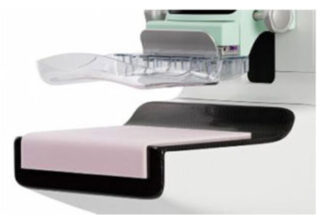
- A comfort improving feature called curved compression surface with its cushions minimizes the pressure and discomfort during mammography by mirroring the shape of the breast for more uniform compression.
- Less than 10 seconds is all it takes for the latest 3D mammography machines to capture a high-quality mammogram image. This minimizes the time duration for which the breast tissue is compressed.
Secondly, the timing related to your menstrual cycle also impacts your comfort. Avoid mammograms from a week before and during your periods.[1] The best time to get a mammogram is a week after your period when breasts are less sensitive and less dense- especially in pre-menopausal women.[2]
Although mammograms may cause momentary discomfort for women with sensitive breasts, the positives are far bigger than the negatives. While the idea of compressed breasts sounds scary, it is not.
Why is compression necessary? How do I benefit from it?
In mammography, breast compression is a critical factor.[3]
In 38% of poor mammography images, inadequate compression played a role as reported by a study and US FDA.[4],[5]
Let’s explore the five key benefits of breast compression during mammography:
- Compression produces clearer images by reducing breast thickness.
- It spreads out the fibrous tissue of the breast, and makes it easier for doctors to see through and detect even the tiny abnormalities that might otherwise be hidden by the layers of tissue.
- If the breast is not well compressed, the overlapping tissue mass itself may look like a suspicious lump; increasing the likelihood of your being called back for a re-examination.
- Compression helps avoid your accidental movement or breathing motions interfering with the scan, that may otherwise produce blurry or unclear mammograms.
- Compression helps minimize radiation dose,[6] because the X-rays travel shorter distances in a compressed tissue and are less likely to scatter.
Some women who undergo conventional mammography in older machines sometimes complain about the discomfort or pain they felt, and skip the life-saving annual screening routine, which has reduced breast cancer deaths worldwide by 30% to 50%[7] due to early diagnosis.
Memories of your last mammography shape your next experience more than the actual experience.[8]
Hence
- Try not to be anxious before your next mammography, and you may feel alright.
- Try to find if there is a 3D mammography center near you. 3D mammography machines are designed to deliver the fastest and the highest resolution mammograms, with more comfort, and at the lowest radiation dose within the allowable limits.
The best protection against breast cancer is early detection because no one can prevent it.
Early diagnosis dramatically improves the chances of complete cure and disease-free survival with 93% or higher survival rates in the first five years.[9]
Also, mammography is the gold standard test for early breast cancer detection as concluded by an expert panel headed by the University of California that reviewed 18 different detection systems.[10]
What should I do next?
Dr. Bagyam Raghavan on Compression & More!
That’s a great question. Here are five key recommendations for your immediate consideration.
- Do not depend on self-breast-exam for early detection: Most medical organizations across the world do not recommend self-breast-exam for routine screening[11] because it does not help early detection. By the time the lump is big enough to be felt by your or your doctor’s hands, it’s already too big, and too late in most cases.
- Never miss your annual screening mammography schedule: Mammography has become more comfortable than ever before, as we discussed above. It’s a simple daycare test that doesn’t even need a doctor’s prescription. It’s a non-invasive, quick, and very accurate breast cancer screening modality compared to any other alternative of today. Hence never miss your annual mammography schedule. A stitch in time saves nine, as they say.
- Even if you don’t have a family history of breast cancer, you need an annual screening: Only 5%-10% of breast cancer cases are associated with a family history[12]. The vast majority of breast cancers occur due to unknown causes and factors such as environment, lifestyle, obesity, etc. Hence, even if you have no family history of breast or any other cancer, please do get a mammography screening done every year without fail.
- Even if your last year’s mammogram was normal, you need a mammogram this year: Mammograms do not provide immunity against breast cancer. The past mammograms neither predict nor assure that you will be cancer-free in the future. Also, interval cancers, meaning cancers occurring between two consecutive annual screening mammograms, can suddenly emerge. Hence, the medical experts recommend prompt annual mammograms to detect cancers when they are very small in size and very much confined to the breast alone.
- Annual screening mammograms can substantially reduce your stress & medical expenses: Just like car insurance that you buy every year with a small premium to protect yourself against a potentially large expense due to an accident that may never occur; spending a small amount on mammography every year may help you save 30% to over 100% of the treatment costs of breast cancer compared to the women who present with advanced-stage breast cancers7.
Early detection may also qualify you for less invasive treatment options. For example, in early breast cancers, chemotherapy may be completely avoided thereby saving you the costs incurred and its side effects.
Most importantly, a small yearly investment in screening mammography may save immense stress to your loved ones which is a priceless benefit if you agree.
If you are eligible for breast screening either by age (40 years and above) or due to high-risk factors such as family history (in which case even if you are younger than 40 years), subscribe to an Annual Screening Mammography plan – A simple ritual that can save your life!

Dr. Bagyam Raghavan, MBBS, MD, Senior Consultant Radiology
Apollo Speciality Hospital, Chennai
- https://my.clevelandclinic.org/health/diagnostics/4877-mammogram Accessed on 4 June 2022.
- Miglioretti DL, Walker R, Weaver DL, et al. Accuracy of Screening Mammography Varies by Week of Menstrual Cycle. Radiology. 2011;258(2):372-379. doi:10.1148/radiol.10100974
- https://www.fda.gov/radiation-emitting-products/mqsa-insights/compression-another-critical-factor-image-quality#:~:text=Compression%20is%20necessary%20to%20separate,needed%20to%20perform%20the%20mammogram. Accessed on 4 June 2022
- van Lier MGJTB, de Groot JE, Muller S, den Heeten GJ, Schilling KJ. Pressure-based Compression Guidance of the Breast in Digital Breast Tomosynthesis Using Flexible Paddles Compared to Conventional Compression. Journal of Breast Imaging. 2020;2(6):541-551. doi:10.1093/jbi/wbaa070
- https://www.fda.gov/radiation-emitting-products/mqsa-insights/compression-another-critical-factor-image-quality Accessed on 4 June 2022
- Holland K, Sechopoulos I, Mann RM, den Heeten GJ, van Gils CH, Karssemeijer N. Influence of breast compression pressure on the performance of population-based mammography screening. Breast Cancer Research. 2017;19(1). doi:10.1186/s13058-017-0917-3