
How Self-Exams May Miss Early Breast Cancer Signs & What’s a Better Solution

How Self-Exams May Miss Early Breast Cancer Signs & What’s a Better Solution
Dr. Vishal Gupta
India’s Leading Breast Imaging Expert
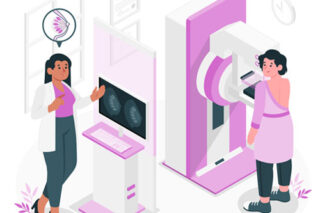 As women, we’ve all been taught the importance of self-examination to detect breast cancer.
While the self-exams are popular, they’re not enough to keep you safe.
Relying solely on self-exams could mean missing the early, treatable signs of breast cancer.
So, what’s the better solution? Let’s understand today.
Why self-exams aren’t enough to keep you safe
Self-exams can only detect lumps that are big enough to feel with hands, meaning they often miss the smaller abnormalities of the early stages of cancer. These early signs can be hidden deep in your breast tissue, especially for women with dense breasts, which is common among Indian women in their 40s and 50s.
By the time you can feel a lump, the cancer may have already progressed to a more dangerous stage. It takes two to five years of growth[1] for breast cancer to be felt even by the trained hands of a doctor. By then, it is already at least 2 cm in size and has probably spread to the armpit. Hence, most medical organizations do not recommend self-breast-examination as a part of screening.[2]
This is why relying only on self-exams isn’t the best strategy for early detection – which is the only protection against breast cancer.
What’s a better solution
Mammography, particularly 3D mammography, is the most reliable way to detect breast cancer early – before it can be felt with hands. Unlike conventional 2D mammograms, which take flat images of your breast tissue, 3D mammography takes multiple pictures from different angles, providing a more detailed view. This allows radiologists to spot tiny, early changes that a self-exam or 2D mammogram might miss.
Studies have shown that 3D mammography significantly helps in early breast cancer detection, enabling the detection of more cancer cells[3] and considerably reducing recall rates[4] for additional tests. The 3D Mammography exams detect 20–65% more invasive breast cancers than 2D alone, with an average increase of 41%.[5]
3D mammography is especially beneficial for women with dense breast tissue, which makes abnormalities in 2D images more difficult to spot.
Now it’s time to clear up a few myths that might try to stop you from getting screened.
Common myths about breast cancer and mammograms
- Myth 1: “I don’t have a family history of breast cancer, so I’m safe.”
Fact: Only 5%-10% of breast cancer cases are associated with a family history.[6] The vast majority of breast cancers occur due to unknown causes and factors such as environment, lifestyle, obesity, etc. Hence, even if you have no family history of breast or any other cancer, please subscribe to an annual mammography schedule once you are 40 years old. For women with a family history or any other additional risk, the doctors may recommend it from a younger age. - Myth 2: “I’m too young for breast cancer.”
Fact: While it’s true that breast cancer risk is often associated with women over 40, younger women are not immune. That’s why it’s crucial to understand your risk factors and make informed decisions about your health. If you have high breast density, a family history of breast cancer, a personal history of previous breast lumps (including non-cancerous), early menstruation before the age of 12[7], certain genetic mutations, etc., it might become unsafe for you to wait until you’re 40 to begin routine annual screening mammograms. - Myth 3: “Mammograms are painful”
Fact: Getting a mammogram done today differs from the olden days. The newer, ergonomically designed compression pads minimize discomfort, and some of the latest 3D mammography machines take just 3.7 seconds to scan, significantly minimizing the compression time. Also, a study[8] points out that memories of your last mammography experience are a good predictor of your next. Hence, try not to be anxious before your next mammography; you may feel alright. - Myth 4: “Mammograms expose me to harmful radiation”
Fact: Mammograms use very low-dose radiation within the strict guidelines approved by the medical and regulatory authorities. Some of the latest 3D mammography machines expose you to even lower radiation than these statutory doses. Also, mammography radiation equals about two months of atmospheric radiation that we are all exposed to daily. The benefits of screening mammograms far outweigh the risks of this small radiation exposure.
- Myth 5: “Mammograms are expensive.”
Fact: Spending a small amount on mammography every year may help you save 30% to over 100% of the treatment costs of breast cancer compared to the women who are diagnosed with advanced-stage breast cancer.[9] Early detection may also qualify you for less invasive treatment options. Most importantly, a small yearly investment in screening mammography may save immense stress to your loved ones, which is a priceless benefit if you agree. Also, many hospitals and clinics offer affordable or even free mammogram screenings, especially during breast cancer awareness months.
In conclusion:
Understanding the dreadful consequences of late breast cancer diagnosis can empower you to stay breast-healthy. Here are some general tips for your action:
- Never miss your annual mammogram: Annual mammograms are vital. They can detect breast cancer early when it is most treatable. Don’t rely on breast self-exams or other modalities. Make it a priority to schedule your yearly screening even if you feel perfectly healthy.
- Select the right mammography center: You may have many options at your place to get a mammogram done, such as a diagnostic lab, a hospital, or a dedicated breast clinic. How do you select one among all available choices? Here are three easy steps to help you choose the right mammography center.
- Overcome your mammography anxiety if you have any: If you feel anxious before a mammography session, you are not alone. Your stress could be due to either it being your first mammogram, your fear of discovering cancer, myths harboured in your mind, or your past uncomfortable experience. Whatever your reason, it’s important to remember that mammograms save lives, and here are seven tips to help you relax before your next mammogram.
- Stay informed. Stay healthy: Your family needs you forever. Your health is as important to them as it is to you. Keep up with the latest research and reliable information on mammography and breast health. Follow healthy routines and medical advice to protect yourself and your loved ones.
- Get your mammogram today: Early detection is the best protection against breast cancer. 3D mammography gives you the best chance of catching breast cancer early when it’s most treatable. So, don’t wait or don’t rely on self-exams alone. If you are eligible for breast screening either by age (40 years and above) or due to high-risk factors such as family history (in which case even if you are younger than 40 years), subscribe today to an annual screening mammography plan at a center near you and never miss your test—a simple ritual that can save your life!
It’s not just about you – it’s about being there for your loved ones.
Take charge of your health and encourage other women to do the same.

Dr Vishal Gupta
MBBS, MD
HOD, Dept of Radiodiagnosis
Sharda Hospital, Greater Noida, Delhi NCR
- https://oregon.providence.org/forms-and-information/a/ask-an-expert-breast-cancer-growth-rate/ Accessed 21 Sep 2024
- https://www.mayoclinic.org/tests-procedures/breast-exam/about/pac-20393237 Accessed 21 Sep 2024
- Skaane, Per, et al. “Comparison of digital mammography alone and digital mammography plus tomosynthesis in a population-based screening program.” Radiology 267.1 (2013): 47-56. https://pubs.rsna.org/doi/full/10.1148/radiol.12121373
- Rose SL, Tidwell AL, Bujnoch LJ, Kushwaha AC, Nordmann AS, Sexton R Jr. Implementation of breast tomosynthesis in a routine screening practice: an observational study. AJR Am J Roentgenol. 2013 Jun;200(6):1401-8. doi: 10.2214/AJR.12.9672. PMID: 23701081. https://pubmed.ncbi.nlm.nih.gov/23701081/
- Friedewald SM, Rafferty EA, Rose SL, Durand MA, Plecha DM, Greenberg JS, Hayes MK, Copit DS, Carlson KL, Cink TM, Barke LD, Greer LN, Miller DP, Conant EF. Breast cancer screening using tomosynthesis in combination with digital mammography. JAMA. 2014 Jun 25;311(24):2499-507. doi: 10.1001/jama.2014.6095. PMID: 25058084. https://pubmed.ncbi.nlm.nih.gov/25058084/
- Liu, L., Hao, X., Song, Z. et al. Correlation between family history and characteristics of breast cancer. Sci Rep 11, 6360 (2021). https://doi.org/10.1038/s41598-021-85899-8
- https://www.breastcancer.org/risk/risk-factors/menstrual-history accessed 21 Sep 2024
- Kornguth, Phyllis J.a,*; Keefe, Francis J.b; Conaway, Mark R.c Pain during mammography: characteristics and relationship to demographic and medical variables, Pain: August 1996 – Volume 66 – Issue 2 – p 187-194 https://www.sciencedirect.com/science/article/abs/pii/0304395996030576
- Feig S. Comparison of costs and benefits of breast cancer screening with mammography, ultrasonography, and MRI. Obstet Gynecol Clin North Am. 2011 Mar;38(1):179-96, ix. doi: 10.1016/j.ogc.2011.02.009. PMID: 21419333. https://pubmed.ncbi.nlm.nih.gov/21419333/